
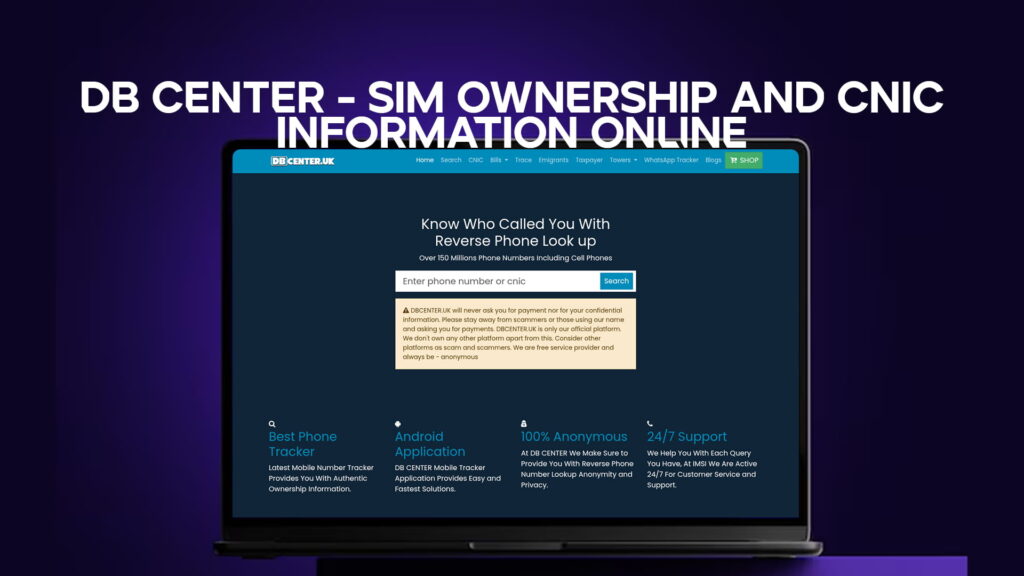
Have you ever received a call from an unknown number and wondered who it was? Maybe it was a missed call late at night, a spam message from a random number, or someone repeatedly calling without leaving a name. These situations are more common than most people think. Finding out who owns a phone number used to be hard. Today, tools like DB Center make it much easier.
DB Center is an online platform that lets you search phone numbers and find out who they belong to. Whether you want to check SIM ownership, look up CNIC-linked information, or simply find out who called you, DB Center brings all of that into one place. With a database of over 150 million phone numbers, including mobile and cell numbers, it is one of the most complete reverse phone lookup tools available online.
What Is DB Center?
DB Center is a web-based service built around one core idea: helping people identify unknown phone numbers. The platform uses a large database to match phone numbers with ownership records. This includes details that are often tied to SIM registration, such as the name of the owner and, in some cases, CNIC-related data that was submitted during SIM registration.
In many countries, including Pakistan, every SIM card must be registered with a valid CNIC (Computerised National Identity Card). This means that when someone buys a SIM, their personal identity is recorded against that number. DB Center taps into this kind of data to give users real, useful information when they search a number.
The service is simple to use. You type in a phone number, hit search, and get back results that tell you who the number is registered to. No technical knowledge is required. Anyone with access to a browser can use it.
Why SIM Ownership Information Matters
There are many reasons why someone might need to check who owns a SIM card. It is not just about curiosity. In many cases, it is about safety, accountability, and peace of mind.
Spam and fraud calls are a growing problem. Scammers use unregistered or anonymously registered numbers to call people and trick them into giving away money or personal information. If you can check who a number belongs to before picking up, or after a suspicious call, you protect yourself.
Harassment and threats sometimes come from hidden numbers. Victims often have no way to trace the source unless they have a tool that links the number to a real person. DB Center provides that link.
Missed calls from unknown numbers are a daily experience for most people. Not every missed call is dangerous, but knowing whether it is from a business, a person you know, or a stranger helps you decide whether to call back.
Business verification is another use case. If someone contacts you claiming to represent a company or service, a quick search on DB Center can confirm whether the number matches the name they gave.
In all of these situations, having access to SIM ownership data is genuinely useful. It takes a few seconds and can save a lot of trouble.
How Reverse Phone Lookup Works on DB Center
Reverse phone lookup is the process of searching a phone number to find the person or entity it belongs to. It is the opposite of a regular phone book search, where you start with a name and find the number. Here, you start with the number and find the name.
DB Center’s reverse lookup system works by cross-referencing the number you enter against its database of over 150 million records. These records include mobile numbers, cell phone numbers, and numbers tied to SIM registrations. The results pull up ownership details linked to that number.
The process is fast. Most searches return results within seconds. You do not need to sign up or create an account to run a basic search. The interface is clean and straightforward, designed so that anyone can use it without confusion.
The database is updated regularly, which means the information you get is as current as the records allow. This matters because phone numbers change hands, and outdated data can mislead. DB Center works to keep its records fresh and relevant.
CNIC Information and SIM Registration in Pakistan
For users in Pakistan, the connection between CNIC and SIM registration is especially important. The Pakistan Telecommunication Authority (PTA) requires all SIM cards to be registered using a valid CNIC. This policy was introduced to reduce crime, prevent SIM fraud, and create accountability in the telecom sector.
Because of this policy, every legally registered SIM in Pakistan should have a name and CNIC number attached to it. When someone registers a SIM at a mobile shop or through a telecom provider, their biometric data and identity card number are recorded and stored.
DB Center uses this kind of registered data to power its search results. When you search a Pakistani mobile number, the platform checks its database for the CNIC information tied to that SIM. This makes it a genuinely useful tool for anyone trying to trace a number back to a real person.
This is also helpful for checking how many SIMs are registered against a single CNIC. The PTA has a limit on how many SIMs one person can register, but SIM fraud is still common. Some people register SIMs illegally using fake or stolen CNICs. A tool like DB Center helps users and even businesses spot suspicious numbers that may be tied to fraudulent registrations.
Who Uses DB Center?
The platform is useful for a wide range of people. It is not limited to any one group or profession.
Everyday users look up unknown numbers they received calls or messages from. They want to know if the number is real, who it belongs to, and whether it is safe to respond.
Small business owners use it to verify contacts. When a supplier, client, or partner calls from a new number, a quick search confirms whether the number matches who they say they are.
Parents use it to check unfamiliar numbers that appear on their children’s phones. This is a straightforward way to monitor who their kids are in contact with.
Journalists and researchers sometimes use reverse lookup tools to trace numbers in the course of reporting or investigating. DB Center’s large database makes it a useful starting point.
HR and recruitment professionals may check candidate contact numbers to confirm identity details during background checks.
Law enforcement and legal professionals occasionally use public reverse lookup tools as a starting point for investigations, before moving to official channels.
The point is that the need to look up a phone number comes up in many different situations. DB Center is built to serve all of them.
Features That Make DB Center Stand Out
There are other reverse phone lookup tools available online, but DB Center has several things that separate it from the rest.
Database size is one of the biggest. With over 150 million phone numbers in its records, DB Center covers more ground than most similar tools. This means a higher chance that the number you search will return a result.
Coverage of cell and mobile numbers matters because many tools only cover landlines or business numbers. DB Center includes mobile and cell phone numbers, which is where most unknown calls actually come from today.
Pakistan-specific SIM and CNIC data sets it apart from global tools that do not account for local registration systems. For users in Pakistan who need to verify a Pakistani number, this is a major advantage.
Ease of use keeps people coming back. The search process takes seconds. The results are presented clearly. There is no technical barrier to using the platform.
No registration required for basic searches means you can get answers immediately without going through sign-up forms or giving your own information first.
How to Search a Number on DB Center
Using DB Center is simple. Here is how the process works:
First, go to the DB Center website. The homepage has a clear search bar at the top or center of the page.
Second, type in the phone number you want to look up. Make sure to include the country code if you are searching a number from a specific country. For Pakistani numbers, this would be +92 followed by the rest of the number.
Third, click the search button. The system will scan its database and return any matching records.
Fourth, review the results. You will typically see the name tied to the number, and in some cases additional details such as CNIC information, the telecom provider, and the region where the SIM is registered.
If no result comes back, it may mean the number is not in the current database, or it may be an unregistered or recently issued SIM. The database is regularly updated, so checking back later is worth trying in these cases.
Privacy and Responsible Use
It is worth being clear about something. Tools like DB Center exist to help people protect themselves and verify information. They are not meant for harassment, stalking, or any kind of illegal activity.
The data that appears in reverse phone lookup results comes from publicly available sources or records submitted during SIM registration processes. It is not private data in the sense that it was obtained through hacking or unauthorized access.
That said, users should use any lookup tool responsibly. Looking up a number to protect yourself from fraud is a perfectly good reason. Using such a tool to track or harass someone is not, and may be illegal depending on your country’s laws.
DB Center provides a service. How you use it is your responsibility.
Tips for Getting the Best Results
A few small habits can improve the quality of your searches on DB Center.
Always use the full number including the country code. A search without the country code may return no results or the wrong results.
If a search returns no result, try alternative formats. Some databases store numbers with spaces, hyphens, or different country code formats.
Check back if a number is new. Newly issued SIMs sometimes take time to appear in lookup databases as records are updated.
Use the results as a starting point, not a final answer. If you are dealing with a serious situation involving fraud or threats, contact law enforcement. DB Center gives you useful information, but official authorities have access to deeper records.
Final Thoughts
Unknown calls are a daily reality. Spam, scams, and unwanted contact are problems that affect almost everyone. Having a tool that helps you quickly find out who is calling gives you more control over your own safety and communication.
DB Center addresses this need directly. With a massive database of over 150 million numbers, coverage of SIM and CNIC data specific to Pakistan, and a simple search interface that anyone can use, it is a practical and reliable resource.
Whether you are checking an unknown number out of curiosity, verifying a business contact, or protecting yourself from a potential scam, DB Center is worth bookmarking. Knowing who called you should not be complicated, and with this platform, it no longer is.
DB Center is an online reverse phone lookup platform that lets you search over 150 million phone numbers to find SIM ownership and CNIC-linked information.
Yes. Simply enter the unknown number in the search bar and DB Center will return the name and details registered against that SIM.
Basic phone number searches on DB Center do not require registration or payment, making it accessible to anyone with an internet connection.
Yes. DB Center includes SIM and CNIC registration data specific to Pakistan, making it especially useful for tracing Pakistani mobile numbers.
DB Center regularly updates its database of 150 million+ records, but results reflect SIM registration data and may not capture very recently issued or unregistered numbers.